Part of The Backrooms Sound Archive
This article is part of The Backrooms Sound Archive, a Wartonno Sound series about Backrooms ambient music, liminal horror, dark ambient soundscapes, overthinking, and The Quiet Archive.
Explore the full archive.
There is a certain kind of room that feels wrong before anything happens.
No monster appears.
No door slams shut.
No voice calls your name.
There is only the hum of fluorescent light, the soft blur of yellow walls, the carpet absorbing every footstep, and the strange sense that the building has been waiting longer than you have been alive.
That is the power of the Backrooms.
The Backrooms began as an online horror concept and later grew into a much larger cultural phenomenon around liminal spaces, found footage, empty office corridors, and places that feel familiar but impossible. In 2026, A24’s Backrooms, directed by Kane Parsons, brought that atmosphere into cinemas, with the official A24 page describing the film through the image of “a strange doorway” appearing in a furniture showroom. The official trailer lists the film as directed by Kane Parsons and released in theaters on May 29.
But the Backrooms feeling was never only visual.
It has always needed sound.
A still image of an empty hallway can unsettle us. But when that hallway begins to hum, when the air has a low electrical pressure, when distant rooms seem to breathe behind the walls, the experience becomes much deeper. Sound gives the space a nervous system.
Backrooms ambient music does not simply decorate the horror. It becomes the horror.
The Backrooms Feeling Is Built on Absence
Most horror relies on presence.
A figure in the doorway.
A shadow behind the curtain.
A face in the mirror.
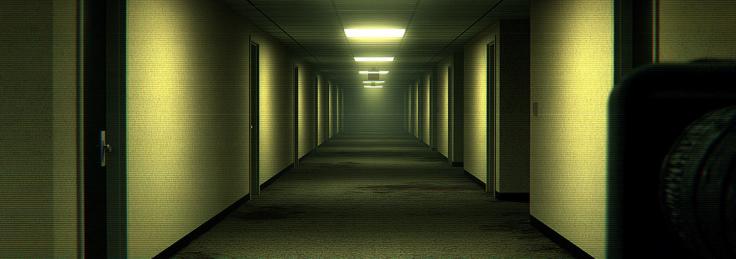
Liminal horror works differently. It often frightens us through absence. The room is empty, but not neutral. The hallway is abandoned, but not asleep. The office looks ordinary, but no one is working there. The mall has lights, but no shoppers. The school corridor looks like childhood, but the children are gone.
This is why liminal spaces feel so powerful. YouTube’s culture and trends writing describes liminal spaces as empty, abandoned, and familiar locations that combine nostalgia with surreal unease, often expressed through ambient visuals and moody music.
That phrase matters: familiar locations.
The Backrooms are terrifying because they do not look completely alien. They look almost normal. They feel like a place you might have walked through once in a dream, or in childhood, or after staying too late in a building where everyone else has gone home.
Backrooms ambient music amplifies that feeling by refusing to behave like a normal soundtrack.
It does not always tell you what to feel.
It often just leaves you inside the room.
Why Ambient Music Works So Well for Liminal Horror
Traditional horror music often prepares you for impact. It builds tension, tightens the pulse, and then releases into a scare.
Ambient music can be more unsettling because it does not release so easily.
A drone can continue for minutes. A soft static layer can sit beneath everything like old electricity. A barely audible tone can make the listener feel that something is present without ever revealing what it is.
This is where dark ambient and liminal horror fit together perfectly.
Backrooms ambient music often uses:
- low drones
- fluorescent hum textures
- room tone
- tape hiss and VHS static
- distant metallic sounds
- muffled air-conditioning noise
- detuned pads
- slow, almost frozen melodies
- long reverb tails
- silence that feels too large
The result is not “music” in the traditional song-based sense. It becomes an environment.
You are not listening to a track.
You are standing inside it.
This is one reason the Backrooms soundtrack matters as part of the current conversation. Pitchfork’s review of Backrooms (Original Soundtrack) describes how Kane Parsons and Edo Van Breemen use dark ambient, glitch, ambient pop, and unsettling sonic detail to deepen the world of the film and create psychological unease rather than simple jump-scare horror.
That is the real lesson for ambient creators, horror writers, playlist curators, and listeners:
The Backrooms are not only a place.
They are a frequency.
The Sound of Fluorescent Light
One of the most important sounds in liminal horror is the fluorescent hum.
It is ordinary. Almost boring. But in an empty room, ordinary sounds become strangely alive.
A fluorescent light hum can suggest:
- institutional spaces
- abandoned offices
- schools after hours
- waiting rooms
- forgotten malls
- empty hotels
- artificial daylight
- time that has stopped moving
In Backrooms-style ambience, that hum becomes a kind of ghost. It is not a melody, but it carries memory. It says: people were here once. Something was supposed to happen here. The room still remembers the function it used to have.
This is the emotional core of liminal horror.
Not just fear.
Recognition.
The strange sadness of a place that still exists after its purpose has disappeared.
Empty Room Sounds and the Fear of Stillness
Backrooms music often works best when it does very little.
A soft drone.
A distant thud.
A faint hiss.
A low synth that never fully resolves.
This kind of music leaves space for the listener’s imagination. And in horror, imagination is often more powerful than explanation.
When nothing is happening, the mind begins to fill the silence.
Was that sound part of the track?
Was it outside the headphones?
Was it in the room?
This is why empty room sounds are so useful for writing, reading horror, creating analog horror videos, or building liminal visual art. They do not force emotion. They create a container for unease.
For Wartonno Sound, this is where Backrooms ambient music connects naturally to dark ambient lofi and liminal soundscapes.
The music is not trying to shock you.
It is trying to hold you in the space just before understanding.
Backrooms Ambient Music as a Listening Ritual
There is another side to this.
For some listeners, Backrooms ambient music is not only frightening. It is strangely calming.
That may sound contradictory, but it makes sense.
Liminal spaces often feel suspended outside ordinary time. They remove daily noise. They give the mind a strange empty room where thoughts can move more slowly. Even when the atmosphere is uneasy, it can still feel focused.
This is why Backrooms-inspired ambient music works well for:
- writing horror fiction
- reading dark fantasy or psychological horror
- late-night creative work
- visual art sessions
- studying with eerie focus
- worldbuilding
- soundtracking empty-room videos
- exploring liminal spaces and dreamcore aesthetics
- sitting with overthinking instead of fighting it
It is not “relaxing music” in the bright, spa-like sense.
It is quieter than that.
Darker than that.
More honest than that.
It gives the restless mind a strange room to walk through.
Want to stay inside the atmosphere longer? Start with the Backrooms-inspired listening guide on Dark Lofi Media, then continue into the Wartonno Sound archive.
A Wartonno Sound Perspective
Wartonno Sound lives close to this threshold: dark ambient lofi, liminal music, emotional stillness, and soundscapes for minds that do not easily switch off.
The Backrooms are useful because they give a visual name to something many people already feel.
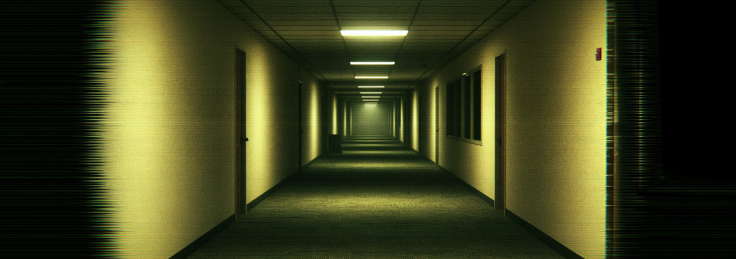
The hallway after everyone has left.
The room between sleep and waking.
The memory of a place you never visited.
The sense that silence has architecture.
In The Backrooms Sound Archive, I want to explore that feeling through music, mythology, and listening rituals. Not as an official soundtrack. Not as a copy of the film. But as a way of understanding why liminal horror, dark ambient music, and empty spaces belong so naturally together.
If the Backrooms are a doorway, then ambient music is what you hear after you step through.
Listen Further
For a deeper Backrooms-inspired ambient music guide, visit the Dark Lofi Media article:
Backrooms Ambient Music – Liminal Horror & Empty Room Sounds
And if you want to explore more quiet soundscapes from Wartonno Sound, visit the listening hub.
Dark ambient lofi, liminal music, and quiet soundscapes for overthinking nights, writing sessions, and strange rooms inside the mind.
FAQ Section
What is Backrooms ambient music?
Backrooms ambient music is atmospheric music inspired by liminal horror, empty rooms, fluorescent lights, abandoned office spaces, dreamcore, weirdcore, and analog horror. It often uses drones, static, hums, dark pads, and distant room tone instead of traditional song structures.
Why does the Backrooms aesthetic use ambient music?
Ambient music works well with the Backrooms aesthetic because it creates atmosphere without explaining too much. It gives the listener space to feel unease, nostalgia, isolation, and psychological tension.
Is Backrooms ambient music the same as dark ambient?
Not always, but they overlap. Dark ambient is usually deeper, slower, and more shadowed. Backrooms ambient music often borrows from dark ambient, drone, lofi ambient, horror ambience, and liminal space music.
Can I use Backrooms ambient music for writing?
Yes. Backrooms-inspired ambient music is especially useful for writing horror, liminal fiction, dark fantasy, psychological stories, analog horror scripts, and eerie worldbuilding.
Is this an official Backrooms soundtrack article?
No. This article is not official or affiliated with A24, Kane Parsons, or the Backrooms film. It is a Wartonno Sound reflection on Backrooms-inspired ambient music, liminal horror, and empty room soundscapes.
liminal space music listening guide if you need more!